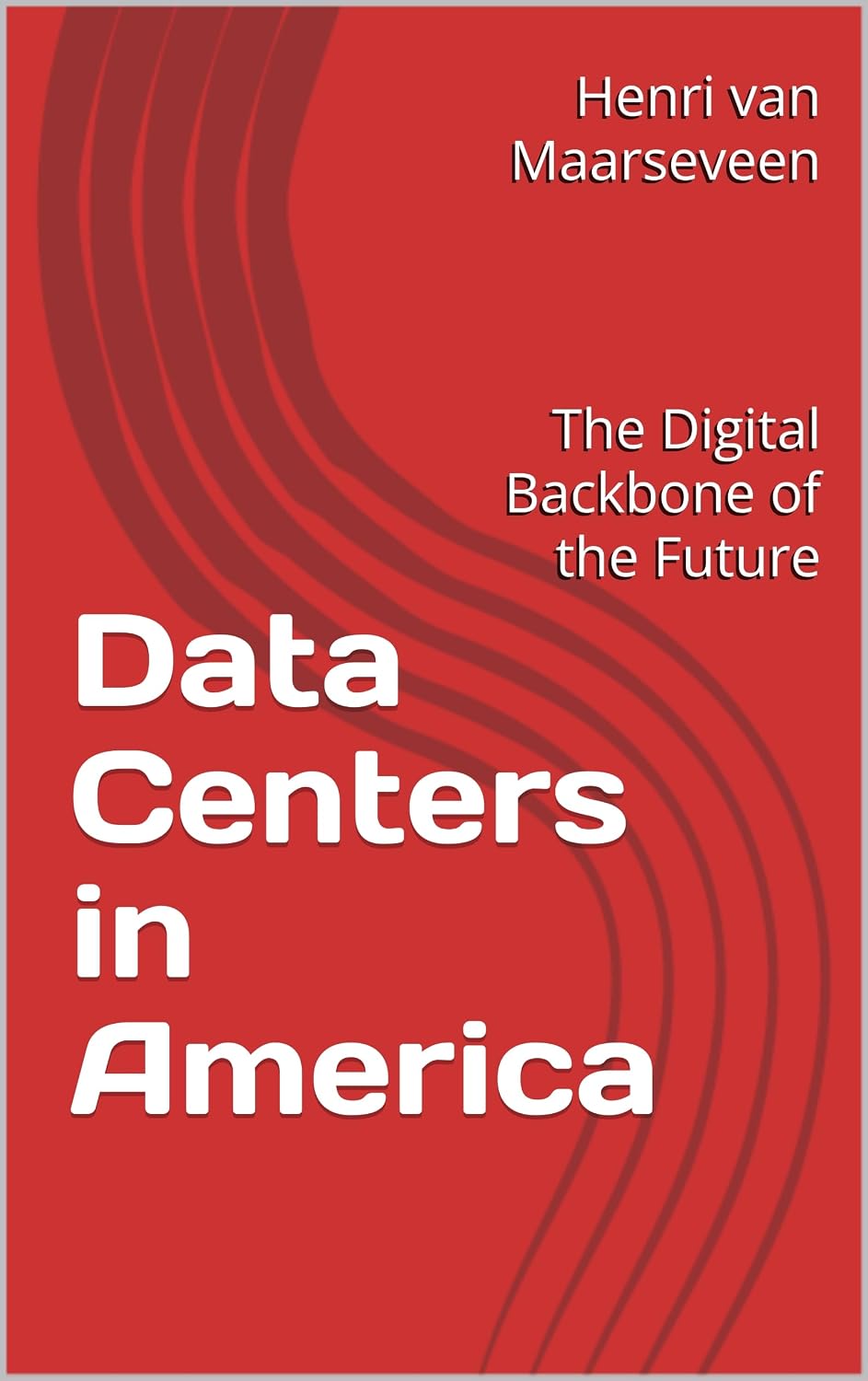
Data Centers in America: The Digital Backbone of the Future (English Edition) odf de graça baixar
por Henri van Maarseveen


Leia uma amostra
Escolha um formato:
| zip | Baixar grátis |
|---|---|
| rar | Baixar grátis |
| epub | Baixar grátis |
| Baixar grátis | |
| lit | Baixar grátis |
| odf | Baixar grátis |
Descrição do livro
Introduction to Data Centers Data centers are the backbone of the modern digital economy, serving as hubs where data is managed, stored, and processed. From powering social media platforms to advancing artificial intelligence research, they underpin almost every facet of our digital lives. Their evolution reflects the broader trajectory of technological progress, beginning with centralized mainframe computers in the mid-20th century and advancing to today's distributed and cloud-based infrastructures. The journey of data centers began in the 1940s with machines like the Electronic Numerical Integrator and Computer (ENIAC). As one of the earliest examples of a programmable computer, ENIAC marked a pivotal moment in computational history. Built to aid military efforts during World War II, it performed calculations critical to artillery trajectory and nuclear research. This early application of data processing showcased the potential of centralized computing systems for large-scale scientific and military purposes. In the decades that followed, the concept of centralized computing grew in prominence. The mainframe era of the 1950s and 1960s saw businesses and governments adopting powerful machines housed in controlled environments to perform tasks like payroll processing and census tabulation. These early data centers were highly specialized facilities designed to maintain the reliability and performance of their costly and delicate hardware. The advent of personal computers in the 1980s and the rise of the internet in the 1990s transformed the role and architecture of data centers. Businesses began to network their systems, leading to the creation of server rooms and eventually large-scale data centers. This shift was driven by the need for greater computational power, storage, and connectivity to support emerging technologies and an increasingly digital society. The 21st century ushered in the era of cloud computing, a paradigm shift that decentralized data processing and storage. Instead of relying on physical proximity to hardware, organizations could now access resources on-demand through vast networks of distributed data centers. This model enabled scalability, flexibility, and cost-efficiency, fueling the growth of tech giants like Amazon, Google, and Microsoft. Today, data centers are more critical than ever. They enable real-time communication, global commerce, and advanced research while supporting technologies like the Internet of Things (IoT) and edge computing. These facilities are evolving to meet the demands of a data-driven future, incorporating innovations in energy efficiency, security, and sustainability. The history of data centers is not merely a technical narrative; it is a story of human ingenuity and the relentless pursuit of progress. From the bulky machines of the 1940s to the cloud-based ecosystems of today, data centers reflect the ever-changing landscape of technology and its profound impact on society.












Autores populares
Icon Group International (402) Publishing lmgdaw (341) Nikolay Krechet (266) Unknown Author (196) Lyudmil Tsvetkov (179) Barrett Williams (166) Kennie B Journals (158) Сергей Каледин (148) Riddler Books (122) ChatGPT ChatGPT (118) NAK Legal Publishing (116) Evgeniia Naumchenko (114) Sharifa McFarlane (97) Jillo Trukudo (96) Quick Witted Coconut (94) Roggie Clark (94) Mint and Cherry Notebooks (93) Marina Buchholz B.Eng (89) Iwona Makara (87) Mary Hirose (87)