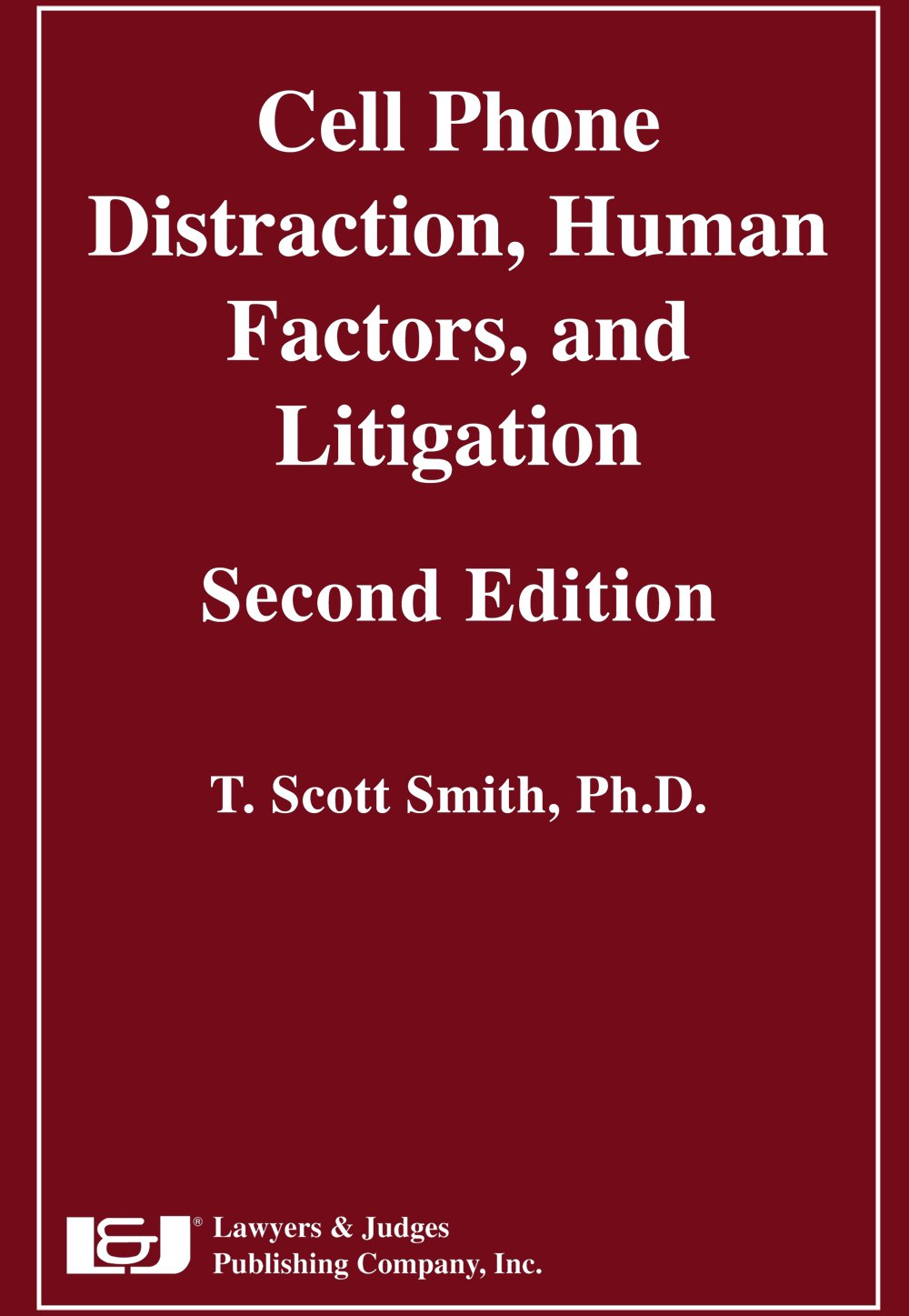
T. Scott Smith Cell Phone Distraction, Human Factors, and Litigation lit
por T. Scott Smith



Escolha um formato:
| zip | Baixar grátis |
|---|---|
| rar | Baixar grátis |
| epub | Baixar grátis |
| Baixar grátis | |
| lit | Baixar grátis |
| odf | Baixar grátis |
Descrição do livro
Cell phones, straightforwardly, represent one of the utmost significant technological and cultural advances since fire. It is difficult for anyone to emerge upon any public location without hearing someone talking on their cell phone or observing someone texting reverently. While cell phones offer easy an entree to communication, the technology likewise compromises psychological, communication, and cognitive realities. Cell phones represent a cognitive distraction. That is, cell phones represent a reduced ability for individuals to pay attention, process information, and then make decisions. Some ongoing behaviors associated with cell phone users have parallel features of addiction. Individuals have intense feelings of elation and despair concomitant with receiving voice calls and also text messages. Most people are not satisfied with checking messages or missed calls once or even twice an hour, but rather must check their cell phones four, five, or six times hourly, perhaps even more. If a cell phone is lost, feelings of uneasiness, despair, and panic often continue. When a cell phone call or text message is received, individuals have derived physiological symptoms, such as increases in blood pressure and heart rate. People spend prodigious amounts of time adding applications to their cell phones. Considering the impact of cell phones on culture itself, it may be reasonably assumed that cell phone use and distraction will similarly continue to impact the field of law across many dimensions. As the general public and attorneys begin to contemplate upon the research and furthermore evaluate cases in the context of cell phone distraction demands, respectfully, guidance is needed to both prompt further investigation and also critically examine case credibility that may pivot on the understanding of the role of cell phone distraction on case particulars. Without an understanding of the historical and cognitive foundations of cell phone distractions, attorneys are little more than guessing or estimating how this medium may affect their case. This book and applicable arguments will help attorneys understand the potential impact of cell phone distraction on plaintiff and defendant behavior. For the general reader, this book will furthermore offer a historical framework and then serve as an impetus for further exploration. This new Second Edition is greatly expanded from the last edition, covering the exponentially expanding information on cell phones and their interaction with our lives. This edition delves further into the psychological, physiological, and social aspects of cell phone use and cell phone distraction, with many new and expanded topics.






Autores populares
Icon Group International (402) Publishing lmgdaw (341) Nikolay Krechet (266) Unknown Author (197) Lyudmil Tsvetkov (179) Barrett Williams (166) Kennie B Journals (158) Riddler Books (122) ChatGPT ChatGPT (118) NAK Legal Publishing (116) Evgeniia Naumchenko (114) Vários Autores (112) Sharifa McFarlane (97) Jillo Trukudo (96) Quick Witted Coconut (94) Roggie Clark (94) Mint and Cherry Notebooks (93) Marina Buchholz B.Eng (89) Iwona Makara (87) Mary Hirose (87)