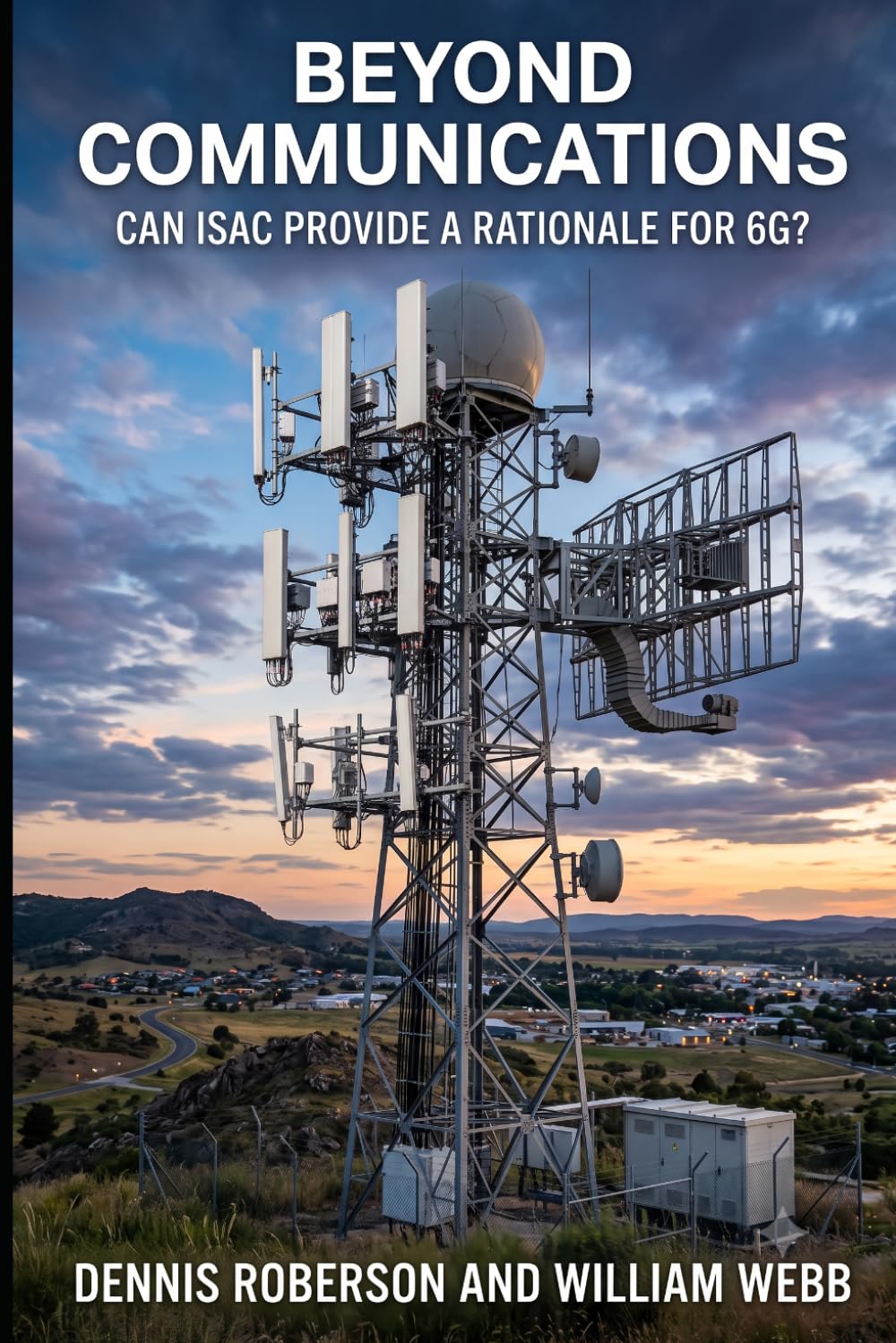
Beyond Communications: Can ISAC Provide a Rationale for 6G? baixar epub
por Dennis Roberson



Escolha um formato:
| zip | Baixar grátis |
|---|---|
| rar | Baixar grátis |
| epub | Baixar grátis |
| Baixar grátis | |
| lit | Baixar grátis |
| odf | Baixar grátis |
Descrição do livro
We currently have separate communication systems and sensing, or radar-like, systems. The concept of bringing these two systems together using 6G's integrated sensing and communications (ISAC) feature is alluring. Not only would there be cost savings from less infrastructure and lower energy consumption, but the dense grid of cellular base stations might enable sensing in areas not previously possible. The additional revenue from new use cases might help fund the deployment costs for 6G and revitalize the finances of the mobile operators. From a technical and standardization perspective the signs are positive. The frequencies and bandwidths proposed for 6G, at 6GHz and above, provide sufficient resolution for many sensing applications, research has demonstrated viable sensing, for example of drones, and there is a strong standardization roadmap already underway in 3GPP. With the ITU designating ISAC as one of the pillars of 6G, the concept has much legitimacy. However, success is far from assured. The economics of ISAC appear weak. ISAC might require most base stations to be modified, a denser grid of new base stations deployed, and might increase energy and computing costs. The revenue streams currently appear relatively small compared to communications revenues and without government support, perhaps using ISAC as part of a drone and missile defense system, the business case does not appear to work. There are also serious privacy concerns about a system that can monitor individuals, potentially even down to some of their vital signs, that may need fundamental legal decisions and if handled badly could result in vigilante action against networks.
This book clearly sets out the case for and against ISAC and draws clear conclusions as to what will be needed if it is to be successful. The book is structured as follows:









Autores populares
Icon Group International (402) Publishing lmgdaw (341) Nikolay Krechet (266) Unknown Author (197) Lyudmil Tsvetkov (179) Barrett Williams (166) Kennie B Journals (158) Riddler Books (122) ChatGPT ChatGPT (118) NAK Legal Publishing (116) Evgeniia Naumchenko (114) Sharifa McFarlane (97) Jillo Trukudo (96) Quick Witted Coconut (94) Roggie Clark (94) Mint and Cherry Notebooks (93) Marina Buchholz B.Eng (89) Iwona Makara (87) Mary Hirose (87) Kingston Publishing (85)